Field Dispatch · Punjab, Pakistan
Field Dispatch · Punjab, Pakistan
Ismail Arif
Co-Founder & Field Correspondent, Climate Meridian
Climate Meridian · Climatebase Fellowship Cohort 9
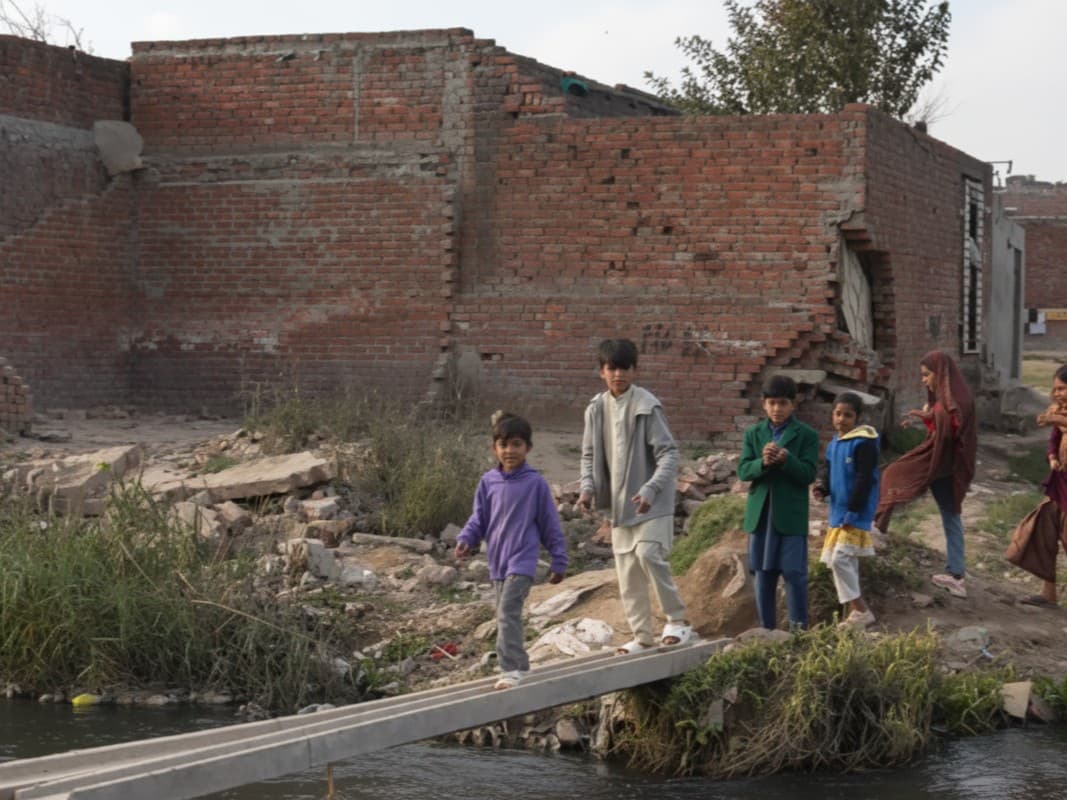
Farkhabad sits in the floodplain of the Ravi River, less than an hour from Lahore but a world away from the city's policy conversations about climate adaptation. For generations, families here have farmed the silt-rich land, raised livestock, and lived with the rhythm of the monsoon. That rhythm has broken.
When I traveled to Farkhabad in January 2026 to document the aftermath of the most recent flood season, the water had receded but its fingerprints were everywhere: collapsed mud walls, fields crusted with sediment, schoolbooks drying on rooftops, livestock lost or sold. Roughly 100 families bore the brunt of the damage.
The flooding in this stretch of Punjab was not a single event but a convergence:
None of these factors alone explains what happened. Together, they describe a pattern repeating across South Asia: climate change acting as a threat multiplier on top of governance and infrastructure gaps.
What I heard from residents was not abstract. A farmer who lost his wheat seed for the next planting season. A mother whose two-room house collapsed in a single night. Children whose school was closed for weeks because the building was unsafe. Elderly residents who had never seen water rise that high in their lifetimes.
Most of the families I met had received no formal disaster assistance. They were rebuilding with what they had — neighbors helping neighbors, remittances from relatives in the city, small loans they will spend years paying back.
Farkhabad is not unique. It is one of thousands of communities across the Indo-Gangetic Plain absorbing the cost of a problem they did not cause. Pakistan contributes less than one percent of global greenhouse gas emissions and ranks among the most climate-vulnerable countries on Earth. The 2022 floods displaced 33 million people; the 2025 and 2026 flood seasons have continued the pattern at smaller but no less devastating scales.
Climate Meridian exists to make stories like Farkhabad's legible — to connect the lived reality of frontline communities to the policy and funding decisions made elsewhere. Documentation is not the same as justice, but without it, justice has nowhere to begin.
We are coordinating a grassroots relief effort for the affected families in Farkhabad and exploring partnerships with established Canadian charities working in Pakistan. The short documentary filmed during the January 2026 visit will anchor a fundraising campaign launching alongside this platform.
If you want to support the Farkhabad families directly, see the further readings section below.
External sources, related coverage, and ways to act.
Field reports like this one are only possible through sustained research partnerships and community trust. Support the next wave of climate documentation from the Global South.